- Heddels
- Posts
- Understanding Natural Indigo Dye
Understanding Natural Indigo Dye

David Shuck
March 03, 2026
Understanding Natural Indigo Dye
An in-depth guide on natural Indigo, with an explanation of the hand-dying process and why it can drive up the cost of natural indigo denim.
James Smith

When browsing and researching raw denim, you will no doubt come across pairs labeled “natural indigo“. Though it is familiar to some, not all understand the true value and importance of natural indigo raw denim.
This article breaks down what natural indigo denim is, how it is made, and how it differs from most other blue jeans in both our niche and the world at large. If you have any questions, jump into the comments or feel free to join our Discord community and speak to denim heads old and new.
What is Indigo?

Indigo dyeing via Slow Motion Goods
‘Indigo’ refers to the dye(s) that make blue denim goods blue. Most of the world’s blue denim is dyed with synthetic indigo dye, but some artisanal makers use denim dyed with traditional natural indigo, made from plants of the Indigofera genus or Persicaria tinctorium.
What is Natural Indigo?

Indigofera Tinctoria via RHS
Natural indigo is a dye derived from the leaves of some plants of the Indigofera genus (chiefly Indigofera Tinctoria) or Persicaria tinctoria tinctorium (AKA Chinese Indigo or Japanese Indigo), previously known as Polygonum tinctorium.
We won’t delve too deep into the long history of Indigofera, but it’s worth noting that natural indigo is the oldest known source of blue color in the world. For thousands of years, people have used indigo to color fabrics made from natural fibers, with its usage spread across many different cultures and regions. Ancient societies in Mesopotamia, the Middle East, India, and West Africa all used this dye in their textiles, with the earliest known piece of indigo-dyed fabric found in Peru believed to be around 6,000 years old.
Central Europe had a different blue dye, woad, sourced from the Isatis tinctoria plant. Used Woad has a lower concentration of the compound, indigotin, meaning it produces a much brighter blue dye. Use of woad dates back to the Iron Age, and it was central Europe’s most dominant dye by the Middle Ages. While a prominent part of the history of blue clothing, no iconic garment, i.e., jeans, is linked to Woad, so it is far less important in menswear.
How is Natural Indigo Dye Made?

A block of indigo dye via Wikipedia.
It would be nice if you could harvest some Indigofera leaves and get to dyeing, but the process is a lot more complicated and requires steps to produce a soluble form of indigotin— the blue pigment we call indigo.
Traditional method:
Harvesting – Indigofera tinctoria leaves are harvested, separated from their stems, and chopped up. These contain a colorless compound called indican, which is the base compound for achieving natural indigo dye.
Enzymatic Conversion “Fermentation” – The Indigofera leaves are chopped up and soaked in vats of water. This causes an enzyme known as β-glucosidase to be released, which naturally breaks down indican into indoxyl—the second stage in the evolution from indican to indigo. This “fermentation” process causes the water in the vats to turn a green/yellow hue, which indicates the formation of indoxyl. Fermentation times vary with climate, so this stage can take anything from 1 to 5 days.
Oxidation – After fermentation, an alkali solution such as lime or wood ash lye is added to the liquid. An alkaline environment allows the indoxyl to be chemically reduced into leuco-indigo, a soluble, yellow-green form of the pigment. When the liquid is exposed to air through stirring or splashing, the leuco-indigo oxidizes back into insoluble indigotin, turning the solution from green/yellow to deep blue. The indigotin eventually settles into a sludge, which can be collected for the next step.
Drying – The settled indigotin is collected, filtered, and dried into cakes or powder. This new, dry substance is what can be used to dye yarns or cloth with indigo.
Aizome (藍染) — Japanese natural indigo dyeing

Sukumo(約) via Japan National Tourism Organization
Japan has its own methods of producing natural indigo dye, known as Aizome. They are similar to the above but include a dry fermentation period that forms a stable that can be stored during the harsh winters in certain regions known for natural indigo, like Tokushima.
Harvesting – Persicaria Tinctoria leaves are harvested and separated from their stems, and dried. Like Indigofera leaves, Persicaria tinctoria leaves contain a colorless compound called indican, which is the base compound for achieving natural indigo dye.
Compost Fermentation (Sukumo 約) – Persicaria tinctoria leaves are stored indoors in piles. Water is added to the piles, which are turned regularly as the internal temperature rises (140–160°) due to the energy created by microbial metabolism. The Persicaria tinctoria gradually composts into a dark, earthy, crumbly mulch over 3-4 months. This material is called sukumo(約), and it is the basis for all aizome.
Create fermentation vats (Ai-date) – Sukumo is added to vats along with water, wood ash lye (alkaline), and sometimes Sake (酒). This causes microorganisms to wake up and helps convert insoluble indigo into soluble “leuco-indigo”, which is what allows dyeing to occur. Once the fermentation vat is active and producing soluble leuco-indigo, textiles can be dyed.

Fermentation vats via Snowmonkey Resorts
Natural Indigo Raw Denim
Natural indigo can be used to dye pretty much anything, but for the purposes of this article, we will spotlight natural indigo denim.
As we mentioned earlier, most blue denim—even expensive, Japanese raw selvedge denim—is dyed with synthetic indigo. It’s cheap, effective, and produces brilliant results. So, why natural indigo? For many denimheads, natural indigo denim represents the pinnacle of denim craftsmanship, adding an artisanal step to the process that yields unique properties only achievable through plant power.
Character & Fades
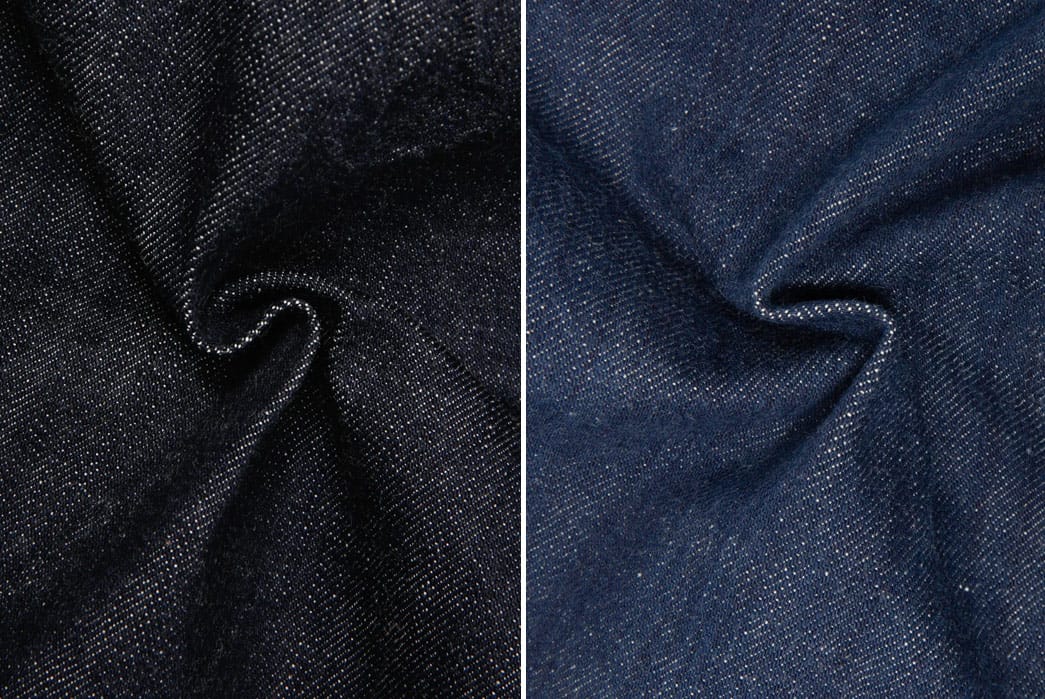
Two different flavors of natural indigo denim: Big John XX002 denim that’s been dipped 16 times for a deep tone (left) and Pure Blue Japan’s Aizome denim that’s been dipped less
Natural indigo dyes yarn differently from its synthetic counterpart. Most raw denim, including natural indigo raw denim, uses rope-dyed yarns. Rope-dyeing involves twisting cotton yarns into ropes and putting them through a repetitive sequence of dipping and oxidation. This process leaves the core of the yarns white or natural, which is gradually revealed as the denim fades.
When rope-dyeing with natural indigo, each dip deposits only a thin layer of color onto the yarn surface: multiple dips are needed to build the deep indigo typical of denim yarn. By the time the yarn is ready for weaving, the dye has accumulated around the white core in subtle micro-layers, which become evident as denim fades. This differs from industrial indigo dyeing, where synthetic indigo is reduced and oxidized under tightly controlled conditions, producing a more uniform and consistent coating on the yarn surface.
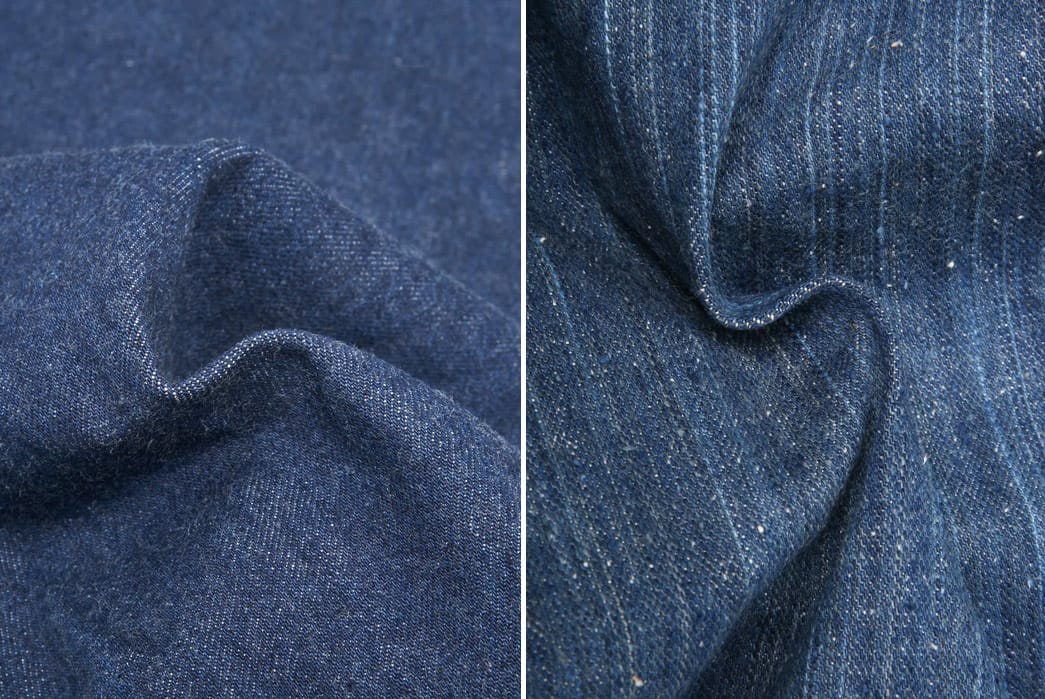
Rope dyed natural indigo denim from Studio D’Artisan (left) vs. Hank-dyed natural indigo denim by Graph Zero (right)
Skein-dyeing natural indigo follows a similar principle, but because the yarn is arranged in loose skeins, the process is more labor-intensive and usually involves fewer dips, producing yarns with even more tonal variation than rope-dyeing.

All of this means that fading usually occurs more gradually and less dramatically on natural indigo denim. As a rule of thumb, natural indigo raw denim produces softer, more nuanced tonal transitions rather than abrupt contrasts, giving the fabric a rich, shimmering palette of indigo hues. That said, denim fades are shaped by many variables. A heavyweight 21 oz. raw denim dyed with natural indigo, for example, could easily deviate from this rule: the stiff creases formed by its weight may create sharper, higher-contrast fades than a lighter 12 oz. pair dyed with synthetic indigo.
Heritage
Natural indigo denim preserves age-old dyeing techniques that require support to continue in a meaningful way. Unlike industrial synthetic indigo, natural indigo relies on perennial commitment to the raw materials, skilled fermentation, and patience. For many denimheads, buying natural indigo denim is a way of honoring this craft, connecting with centuries of textile tradition, and keeping artisanal methods alive.
Rarity

Workers in Tokushima separating Persicaria leaves from stalks via Japan Travel
Due to the labor and resource-intensive production process of its yarns, natural indigo denim is far less common and typically saved for limited runs. This ultimately means they are more expensive to purchase.
Plant-Based
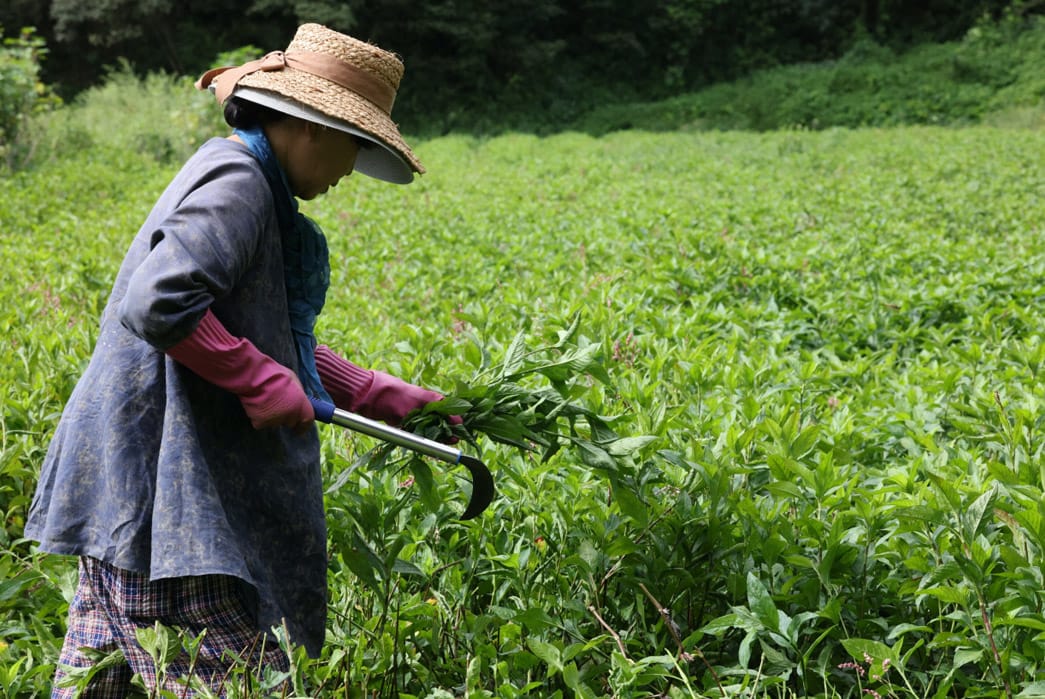
Persicaria Tinctoria cultivation via Asia News
Unlike industrial indigo dyeing, which relies on synthetic chemicals and laboratory-formulated reducing agents, natural indigo uses plant-derived dye and fermentation-based reduction, resulting in a more traditional, minimally processed approach.
Is Natural Indigo Sustainable?

In its current output, yes, but natural indigo is not sustainable for mass production. The farmland needed to grow Indigofera and Persicaria tinctoria, combined with irrigation needs and more water-intensive dyeing processes, would be unthinkably large. To make 1kg of usable indigo pigment, you need roughly 10-20kg of leaves. When you think of how light a leaf is—that’s a lot of plants.
While synthetic indigo uses more fossil fuels, it is more efficient and scalable.
Natural Indigo Denim Products
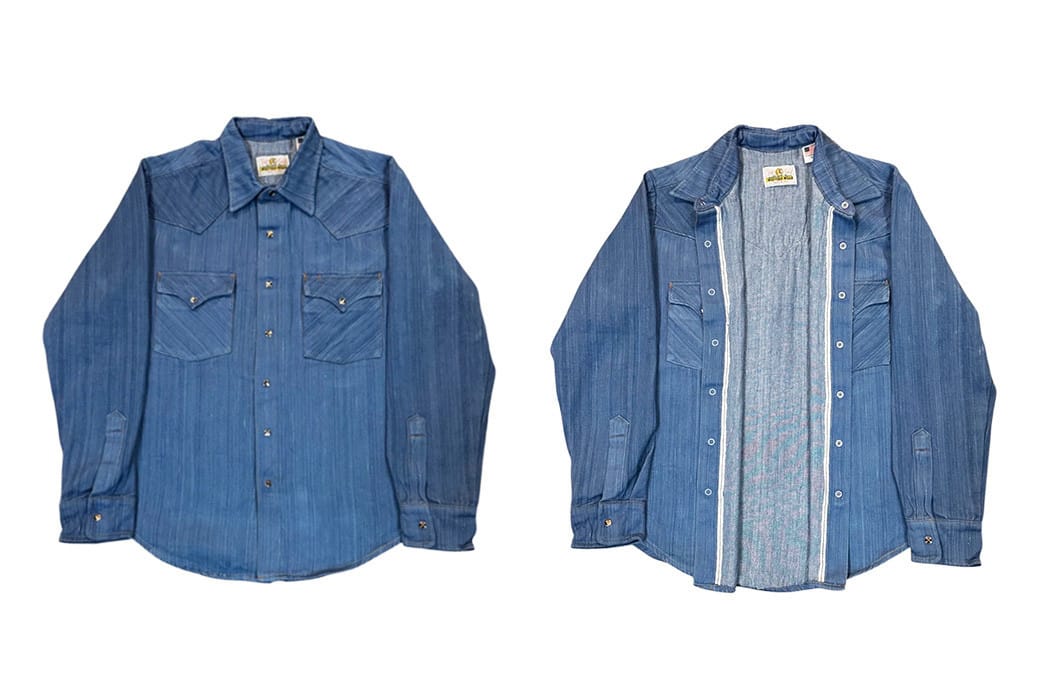
Available for $325 from Left Field NYC.

Available for $600 from Left Field NYC.

Available for $424 from Redcast Heritage.

Available for $324 from Redcast Heritage.

Available for $164 (crowdfund) from GUSTIN.

Available for $414 from Redcast Heritage.
Like this? Read these:


What did you think of today's newsletter? |