- Heddels
- Posts
- The History of Ugly Christmas Sweaters
The History of Ugly Christmas Sweaters

David Shuck
December 25, 2025
The History of Ugly Christmas Sweaters
We look at the kitschy winter sweater and the slippery slope from which it devolved from Scandinavian greatness to something else entirely.
Albert Muzquiz
If a corpse were fished out of the icy waters off Ireland or the Shetland Isles, the identification process would be nigh impossible without the help of the deceased’s sweater. In a time long before fast fashion, one even before the industrial revolution, a fisherman’s wife would knit him a sweater for his work. And as legend goes, each would add her own minor touches to the garment. This was not just a flippant aesthetic decision—a knitter’s signature cable-stitch or pattern could identify her loved ones, lest the unthinkable occur.
So when you’re a couple egg-nogs deep at your ironic “Ugly Christmas Sweater Party,” try not to get too melancholy or morbid. Rather, think of the wool sweater’s bizarre evolution, from workwear to leisurewear, which parallels many of the famous items we discuss on Heddels. But unlike those other things, the ugly sweater has the added elements of the commercialization of Christmas and the ugly-as-cool thing that happened in the 1980s.

Good Morning America Ugly Christmas Sweater Party via Good Morning America.
Our pleasantly over-exhaustive article will trace the history of the sweater and the ancient textile from which it’s made, all the way to the current magnum opus of modern-nonsense that is the Ugly Christmas Sweater.
It All Starts With Wool
Wool House. Image via Element Arts.
Wool is one of the oldest textiles ever used. Early sheep were woolly, not hairy, so they had to be bred selectively in order to produce what we think of today as wool. At some point, humankind didn’t just wear these woolen hides; they started making thread from the fibers. The crimp of wool fibers makes for a dense, somewhat porous fabric. Body heat warms the air trapped inside the wool, making it an extremely practical option for those living in chillier climes. Wool is also highly absorbent, which actually keeps the wearer dry. The fibers can soak up nearly a quarter of their weight and still keep you warm.
While hand-knitting wool had been practiced for nearly two thousand years, knit tunics resembling sweaters began to appear in the fifteenth century in both the British Isles and Scandinavia. And while much of the current Christmas Sweater literature seems to point to the Scandinavian school as the influence for their ironic contemporary descendants, it’s just as important to give credence to the U.K.’s contribution.
The following are some of the most iconic sweater designs, all of which are, to some degree, used as influences for the modern kitschy sweater.
The Guernsey Sweater

Gansey in action via Le Tricoteur & Propagansey
Easily the least festive of the Christmas Sweaters’ ancestors, the Guernsey—also known as a Gansey—is important to acknowledge because of its working-class roots. In the above picture, the subtle differences between the sweaters are clear, if subtle. The product of home-knitting to identify family members in case of untimely death at sea.
Guernsey sweaters did not experiment with color, only texture. The Guernsey is named after the Channel Island of its origin, where it was tightly knit from worsted wool. It was knitted in the round, so it had no seams for icy winds to creep through. Gusseted arms helped mobility, and deliberately short sleeves stopped cuffs from getting caught or staying wet during fishing. Despite the variation in knitting patterns and textures, the hem was always left plain so that it could be easily recrafted.
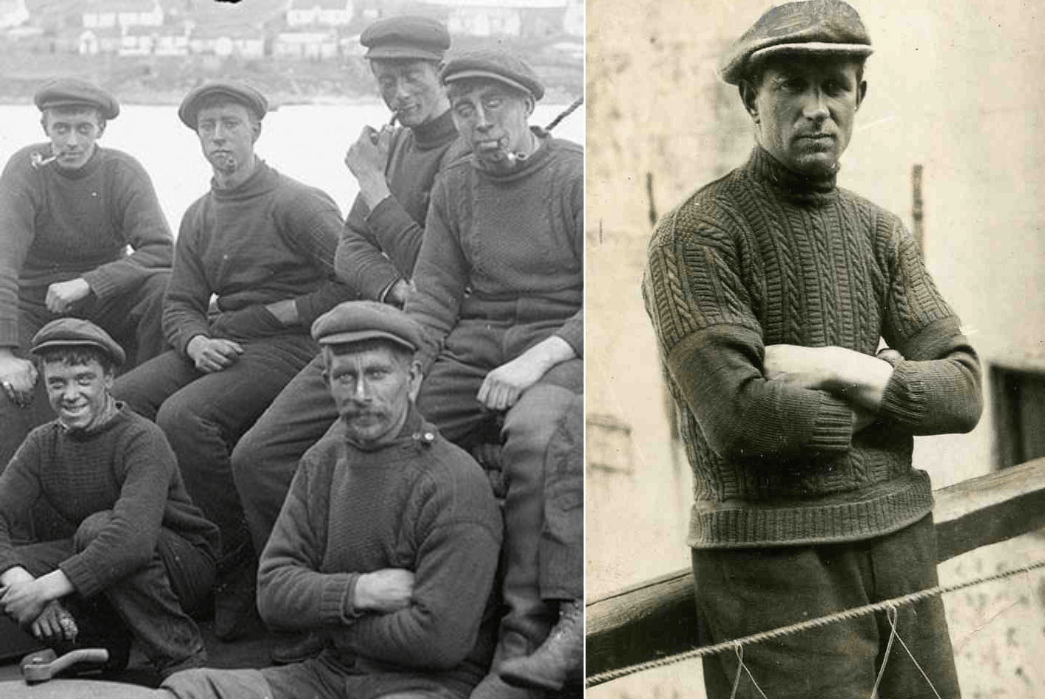
Images via Attire Club & Pinterest
The Fair Isle Sweater

Fair Isle. Image via CNN.
The Fair Isle sweater originated on the small island of the same name in the Scottish Shetland Isles. This sweater is far more colorful than the Guernsey and quite a bit closer to our beloved tacky Christmas options. The Fair Isle is also knitted in the round with between two and five alternating colors, chosen to be bold and visible so that fishermen could be easily spotted.

The Prince of Wales wears a Fair Isle. Image via Wikipedia.
Mariusgenser Sweater
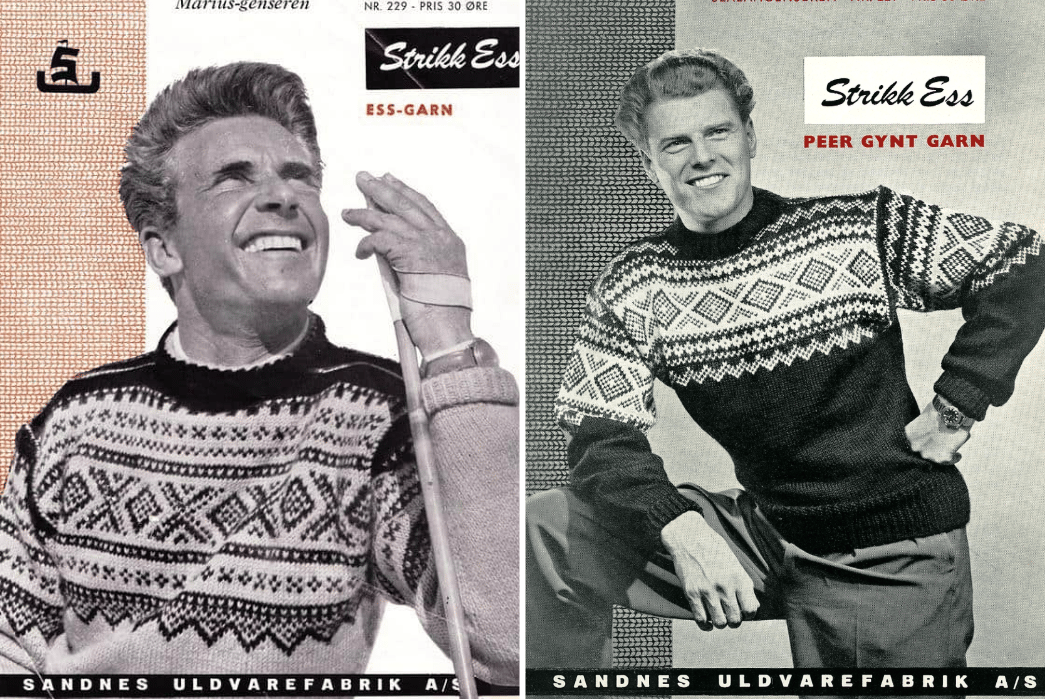
Vintage Marius Sweater ads via Mall of Norway
The Mariusgenser sweater is an homage to classic Norwegian knitwear and was designed far later than our other examples. Designed in the years following World War II, they were named after the Norwegian actor, fighter pilot, and alpine skier, Marius Eksen. Traditional Norwegian sweaters were limited to the color palette of the sheep the wool came from, but Marius sweaters often come in red, white, and blue, the colors of the Norwegian Flag.

Image via A-Vet
The Marius sweater and many other Norwegian sweaters would come to be known generically as Norwegian Sportswear, indicating a change from their working-class roots to leisurewear for snowy resort-goers.
Lopapeysa Sweater
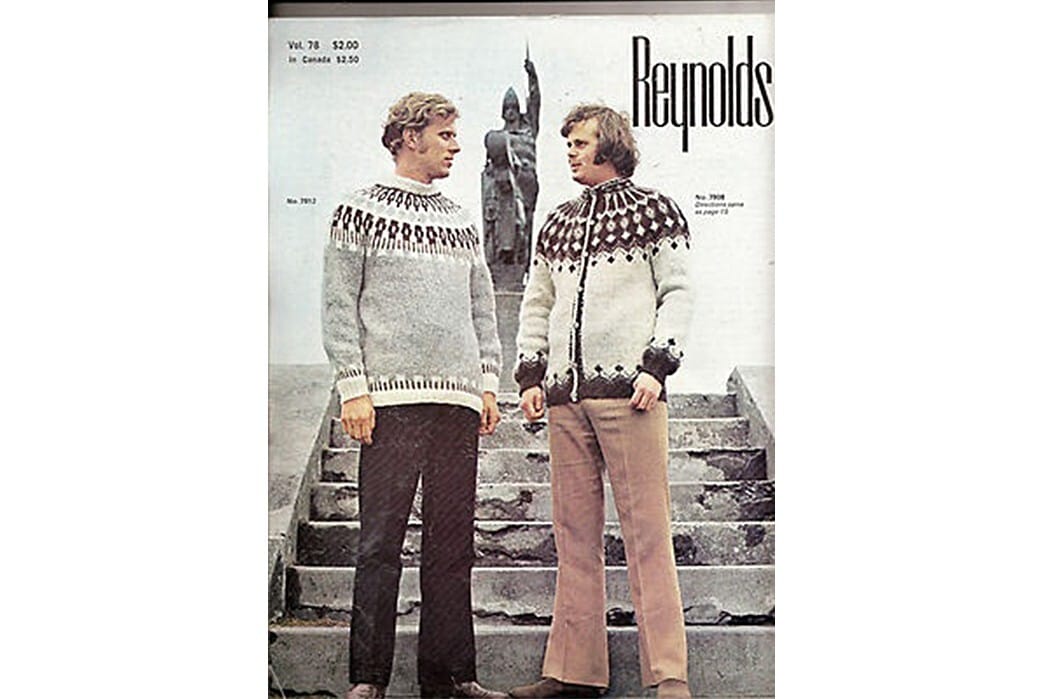
Lopapeysa Sweaters. Image via Pinterest.
Lopapeysa is an Icelandic Sweater, originating in the mid twentieth century, and like its Norwegian sibling, also takes cues from a long history of knitwear. The Sopapeysa is identified by the large circular pattern that circles the neck, and oftentimes by the waist and wrists, which match this upper design.
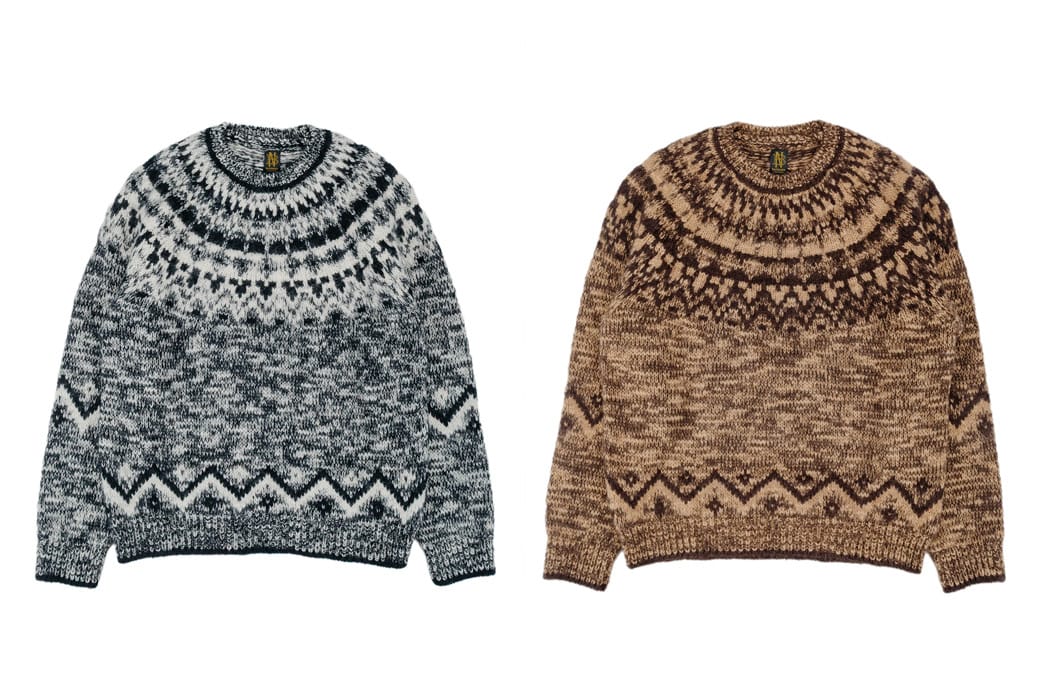
Lopapeysa-inspired sweaters by Japanese label Batoner, available for $333 from Lost & Found.
Contemporary History

Gary Cooper in a sweater while skiing. With Ingrid Bergman on his left and Clark Gable on his right. Image via Pinterest.
In the years after World War II, a new emphasis was placed on outdoor recreation. The National Parks received renewed attention, families road-tripped, and servicemen joined motorcycle clubs of various levels of rowdiness. Skiing was just one of these many attractions, and seeing the likes of Cooper clad in a Norwegian-style sweater was sure to inspire others to don what was becoming a crucial piece of leisurewear.

Olympic Gold Medalist Steig Eriksen. Image via Pinterest.
A now-peaceful Europe meant more travel opportunities, and the charmingly kitschy sweaters from Iceland and Norway in particular took on a somewhat romantic and foreign air. The formula of movie stars and exotic European locales combined to make the cozy sweater a surprisingly chic fashion choice.
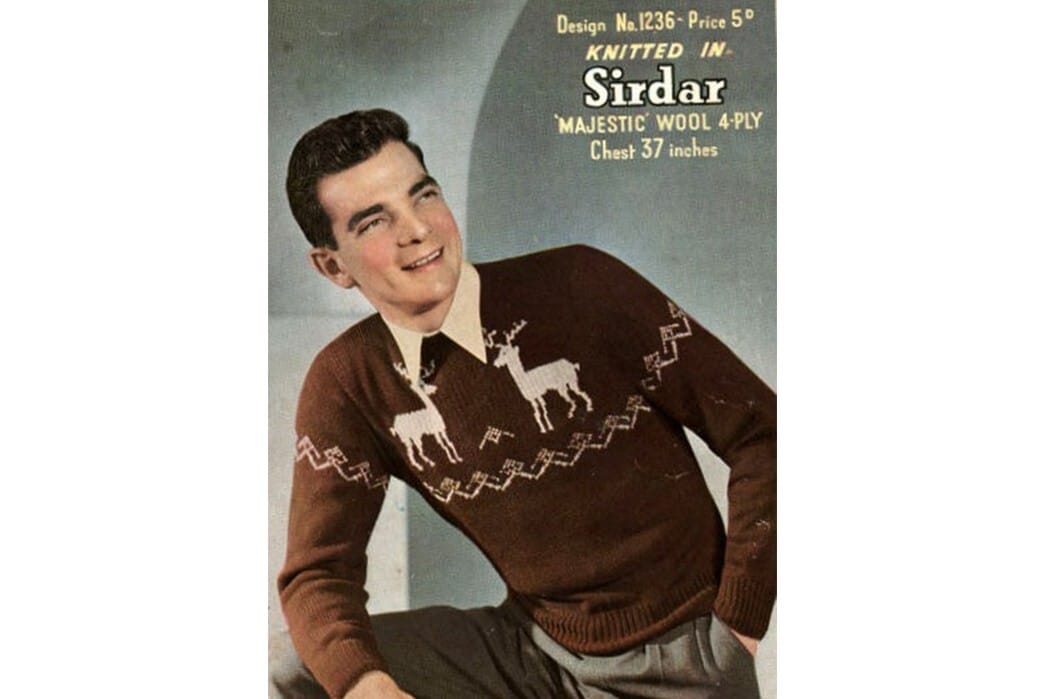
Dorky Reindeer Sweater. Image via Pinterest.
The newfound Scandinavian cool of the postwar era coincided with the democratization and commercialization of Christmas. Before WWII, only the very wealthy had Christmas trees and a sizable feast. Most children were likely to receive a piece of fruit in their stocking for the holidays, which seemed incredibly quaint by the late 50s and 60s.
With Christmas becoming more and more important to Americans, themed clothing rose to match the demand. Makers downplayed traditional cables and geometric designs in favor of more obvious Scandinavian details like reindeer, which could just as easily be incorporated into the newly-forming Christmas mania.

Early Christmas Sweaters. Image via Britain Does Vintage.
The link that formed between a traditional and practical cold-weather garment and the Christmas season was still rather subtle in the postwar era, but by the 1980s, things definitely changed.
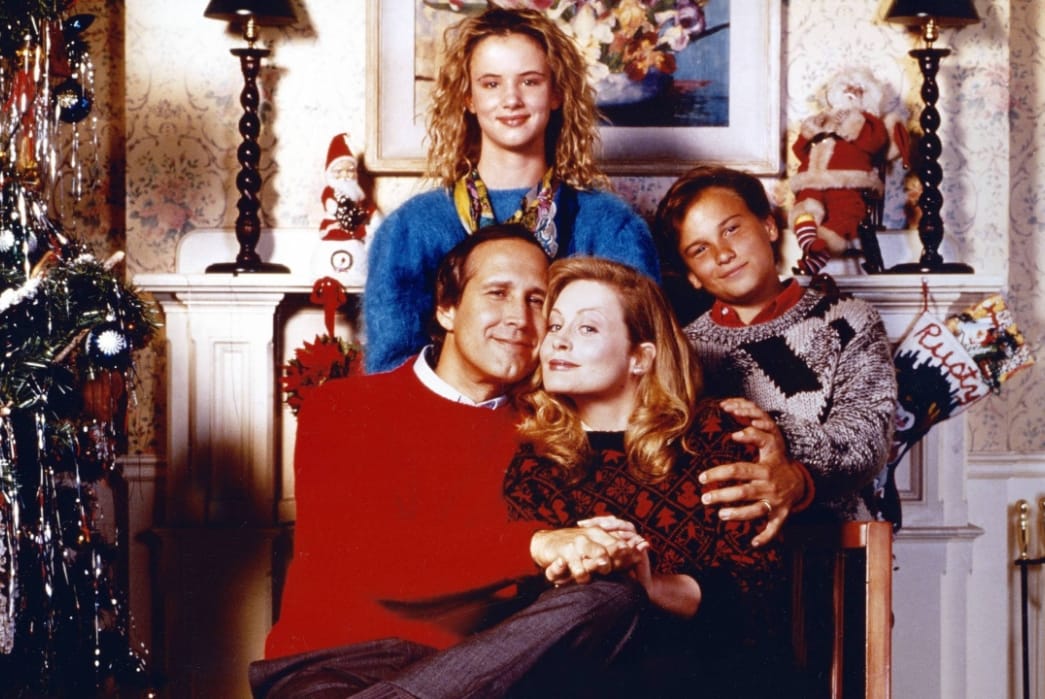
The 1989 film, National Lampoon’s Christmas Vacation, is frequently cited in the Ugly Sweater history. Although Chevy Chase’s sweaters in the film tend to be more traditional than the over-the-top examples from The Cosby Show, they definitely put the nail in the cool sweater’s coffin.
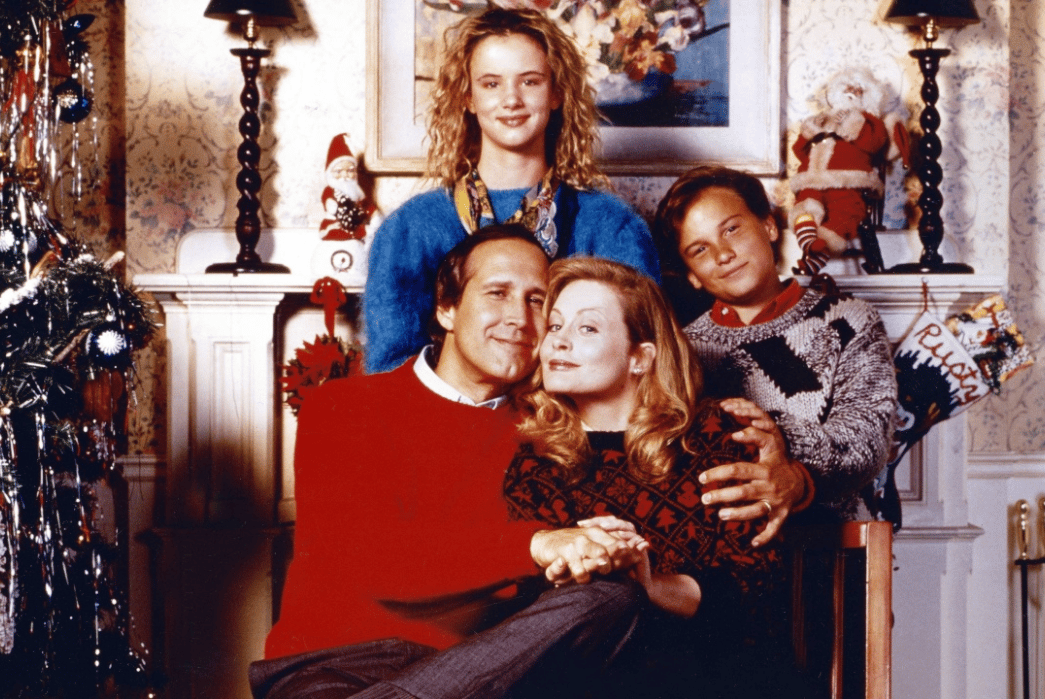
National Lampoon’s Christmas Vacation via Flicks
The craze for Scandinavian-inspired sweaters inspired by the romantic, adventurous notions of outdoor exploration was clearly over by the 1980s. The sweater is fully domesticated. No longer even leisurely sportswear, the patterned wool sweater is now solely a Christmas phenomenon.
The Era of the Ugly Sweater

Authors of “The Ugly Christmas Sweater Party Book.” Image via Getty Images.
How many grown men does it take to write a book on Ugly Christmas Sweater Parties? Actually, three, as it turns out. The book on how to host the perfect ugly sweater party asserts that the first-ever Ugly Christmas Sweater party occurred in 2002 in Vancouver. The ensuing media circus about these sweaters means that now more and more sweaters are being made with the specific goal of being ugly. The trend has blown completely out of control from the slightly festive reindeer knits of the 1950s.
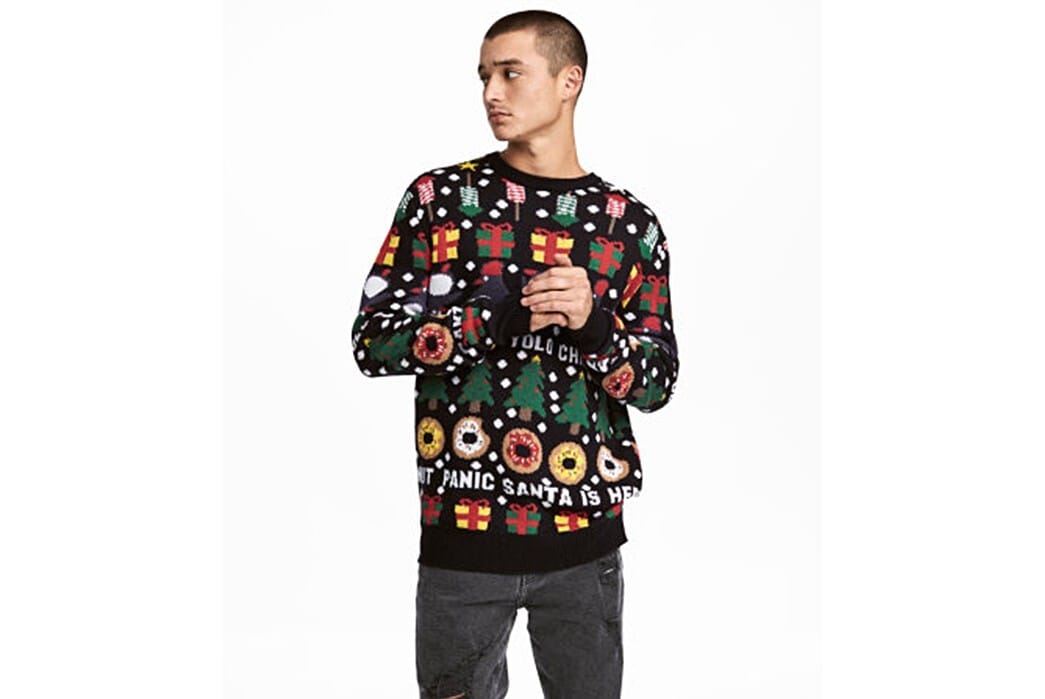
Festive Christmas Sweater via H&M.
From workwear to leisurewear to 80s excess, the sweater reaches its last stop at the Ugly Christmas Sweater. The fad has become so popular that people cannot even bother to find vintage ones; they can simply go to H&M to buy a ready-made ugly sweater for the holiday party season. But how will anyone identify you if you drown this Christmas season if your ugly sweater is exactly the same as everyone else’s?
What did you think of today's newsletter? |