- Heddels
- Posts
- Fade Friday – Ben Davis Chore Coat (5 Years, 1 Wash, 1 Soak)
Fade Friday – Ben Davis Chore Coat (5 Years, 1 Wash, 1 Soak)
/ Fade Friday /
Fade Friday – Ben Davis Chore Coat (5 Years, 1 Wash, 1 Soak)
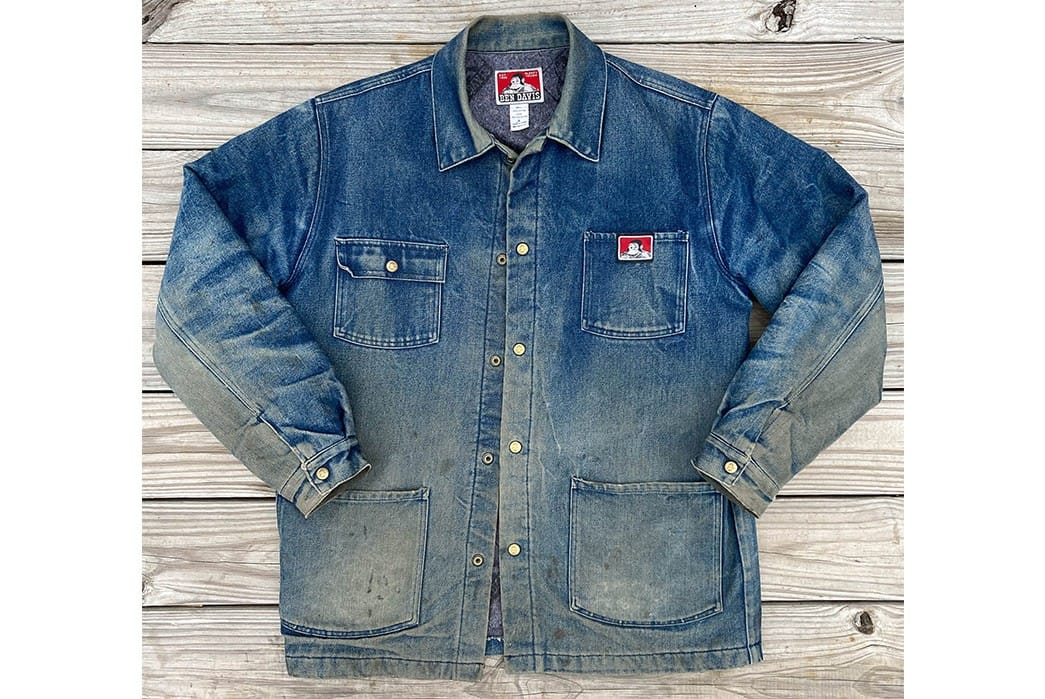
Malcolm up in Boothbay, Maine, wore this Ben Davis Chore Coat for 5 years, and it might have the most righteous fade history I’ve ever seen. The thing is, he purchased this jacket for work, which is always a great omen for epic fades. But the work wasn’t just any work; Malcolm was starting to build his own timber frame house, as one does. And from then on, while juggling the build, he was doing carpentry and masonry jobs with this jacket always along for the ride. Building fades while building a house? This might be a Heddels first.
Now, we don’t know how the house turned out, but if it’s half as good as this jacket and the roof doesn’t leak, I’d say it was a success. Getting just one wash and one soak, what you see is what you get. And that’s a wild gradient from the top-down as if was in front of a light source in darkroom. The top is for sure broken in, but it’s the torso-to-waist area that’s completely blasted. Although it’s the whiskering that extends the whole sleeve that really has my attention.
/ Sales Shortlist /

“Your Jeans have a beautiful weft”
Sales
Companion Denim (sample sale)
Unmarked (sample sale)
Jeans & Pants
Fortela Seattle Pleated Trouser $395 $235
Shirts & Tops
Dehen 1920 Shawl Sweater Coat Charcoal $425 $297.50
Outerwear
Footwear
Astorflex Ezeflex in Sabbia $268 $65 (!)
ROA Hida – Taupe/Black $525 $ 393
/ New Releases /

The sun is only getting stronger from here on out. That’s right. Tuck your lil watch cap away for a while. But fret not, it will be waiting for you just where you left it. And double fret not, because you get to replace it with a Wies Made Denim Ball Cap. To put it simply, this jean cap mogs any hat it’s in the room with.
Using 14 oz broken twill denim from Mt Vernon Mills, you get to wear the same weight denim as your legs, on your head. And if you want to really get into the whole craftsmanship thing, just know the premium ring-spun cotton was woven on vintage American looms. So yeah, it’s the real deal.
Made in the USA and finished out with the brand’s signature red, white & blue bartacks on the adjustment stay and brass hardware powering the adjustable strap, here is your guide to great fades in 6 panels or less.
Available for $74 from Wise Made.
/ Together with Left Field NYC /

Hey, you! Yes, you. You know that deadstock Vidalia Mills denim won’t be around forever, right? The now-closed Louisiana mill was only open for 5 years, so its short-lived selvedge fabrics are poised to become super rare. You know who still has some, though? Left Field NYC. And they’ve used it for this special edition Muleskinner jacket with a 1920s-style back buckle.
Whether you think this will become a future collector’s item or you simply want a really nice raw denim jacket, this edition of Left Field’s fan-favorite Muleskinner jacket should fit the bill. It’s made from deadstock 14 oz. raw selvedge denim, woven by the short-lived Vidalia Mills using the OG Draper X3 looms from the legendary Cone Mills White Oak Plant. In other words, it’s a piece of American selvedge history, which just so happens to be a masterfully crafted denim blouson with a single chest pocket, dual handwarmer slash pockets, and a button placket flanked by parallel pleats à la Type I and II.
Left Field’s signature green detailing can be seen on the bar tacks, keyhole stitching, and painted buttons, but the special flair on this particular Muleskinner is the reproduction 1920s brass and nickel cinch buckle on the back. As well as helping you dial in the fit, this is a charming vintage detail that will only get better with age.
Each piece is made in the USA with triple-felled needle stitching throughout, leather washes on the back of the button tacks, and a heavyweight vegetable-tanned leather patch. Custom bandana-print fabric forms two hand inside pockets, while a custom Left Field x Vidalia Mills label seals the deal.
Available at Left Field NYC for $298.

Another string in the bow of one of the world’s finest denim-centric menswear stores: Pherrow’s has just landed at Madrid’s Redcast Heritage.
Redcast’s mission is “discover, select, and share the treasures of denim culture with the world,” so adding Pherrow’s to their roster of brands is an absolute no-brainer. The Japanese brand was founded in 1991 by Masahiro Shimura, and over the last 3 and a half decades, they have carved their niche in the Japanese denim & heritage-wear scene. They’re known for their takes on some of our favourite classics of American workwear and militaria.
Like all the best things, Pherrow’s’ inspiration comes from mid-20th century garb — so we’re talking selvedge denim, beautiful t-shirts and sweatshirts, chinos — utilitarian menswear classics. On top of this, everything is made in Japan, despite the fact that Pherrow’s goods are typically less expensive than comparable Japanese labels.
To launch the brand, Redcast has some heavy hitters in stock. Firstly, the brand’s signature P41M Chino in two classic colors, beige and olive. Inspired by the US Army’s M-41 trousers that were adopted during the Second World War, Pherrow’s modern version is made from a high-density woven chino cloth, a sturdy fabric that helps to recreate the sheen that the original officers’ trousers were known for.
Another Pherrow’s staple: their 521SW Regular Straight Jeans. The brand’s designers took a deep dive into vintage jeans from the 1940s and 1950s for these, even disassembling a pair from the ’50s to interrogate their fiber composition and weaving structure. The resulting pair is crafted from Pherrow’s custom 13.5oz selvedge denim, woven from a blend of American and Australian cotton with their signature yellow and navy selvedge and Starch Wash process — the SW in the jeans’ name — giving them a true vintage feel. The 521SW is part of Pherrow’s most well-known range, their Stormy Blue denim line. This is noted through the S&B Co. stamped copper rivets and handsome engraved aluminium buttons.
Pherrow’s needed more stockists outside of Japan, and it’s great to see Redcast answering that call.
Available at Redcast Heritage from $140.
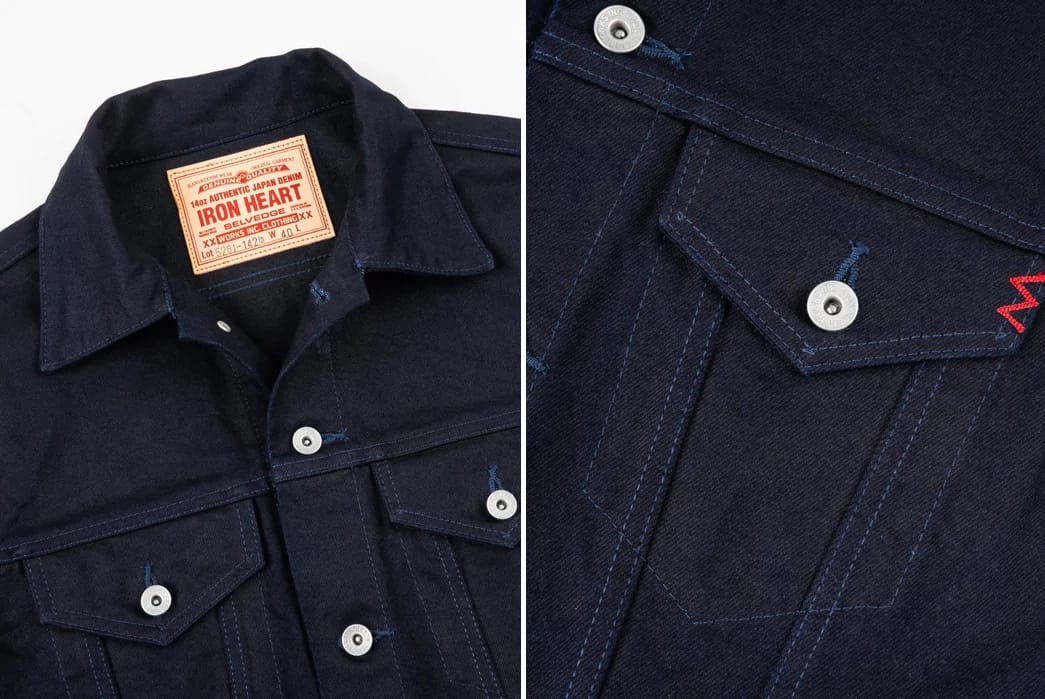
On a daily basis, you are prone to seeing at least one trucker jacket inspired by the Levi’s Type III. The person might not know they’re wearing it, but that doesn’t make it less true. From fast fashion companies and mall brands to the biggest designers in the world, everyone seems to have a trucker. But far fewer have versions that are justified. But the Modified Type III from Iron Heart is at the tippity top of that list.
Iron Heart has been making top-tier Type IIIs for years, and the Indigo/Black edition is one of the most striking. The inky 14oz selvedge denim is achieved through indigo rope-dyed warp and a black sulphur-dipped weft. Starting off super dark, you can expect some bright, high-contrast action once the fades get so heavy that the white core of the yarns starts showing through. Sure, a classic denim tuxedo is possible with your favorite pair of raws, but it might take a while. So enjoy the tone clash while you can.
Styled with textbook ‘V’ stitched front panels, compact flap chest pockets, and adjustable waist cinches, a slightly longer body, and the addition of love-em-or-hate-em handwarmer pockets bring this design into the modern age. Signed, sealed, and delivered with a vegetable-tanned steerhide patch and red Iron Heart embroidery.
Available for $419 from Iron Heart.
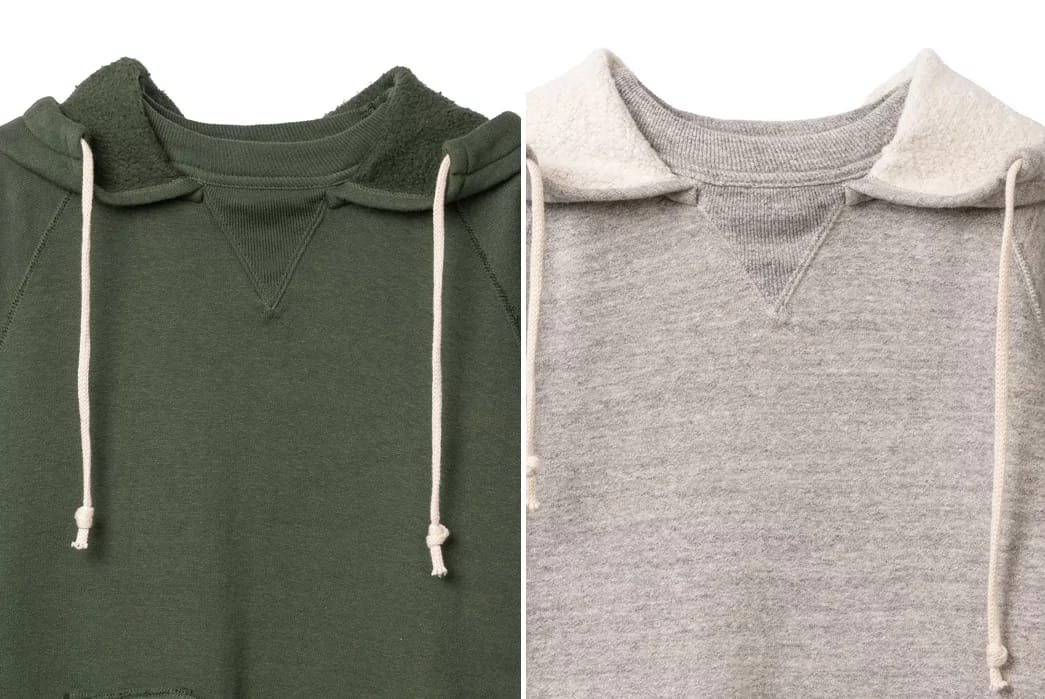
What came first: the hoodie or the sweatshirt? This isn’t a chicken-and-egg scenario; it’s the sweatshirt, and the hoodie came from there. Though there was an extra step in the evolution: the afterhood. Emerging in the 1930s, sportswear makers began modifying crewneck sweatshirts by adding a sewn-on hood and a kangaroo pocket—creating a transitional design that bridged the gap between the two.
Original afterhoods are rare on the vintage market, but heritage and denim brands have stepped in with high-quality reproductions. The latest brand to make its own real-deal After Hood is London’s Allevol.
Made in Japan from mid-weight loopwheel fleece, Allevol’s Afterhoods stay true to the originals in both look and construction. They feature a bound crew neck, with the sewn-on “after hood” that gives them their name. This is complemented by dual patch pockets, classic V-stitch, raglan sleeves, and ribbed hems and cuffs to complete a strong ’30s aesthetic.
The cotton fleece itself was also made in Japan, on one of only around 400 loopwheel machines still in use in Wakayama. These were also a standard in the USA from the 1920s-1960s, meaning original afterhoods were likely produced on similar machines. Loopwheel machines weave at a very low thread tension, which produces a high-quality fabric that’s unbelievably soft.
Allevol’s Afterhood is available in 6 (!) colors — green, navy, black, white, and 2 shades of grey.
Available for $220 from Clutch Cafe.
/ Weekly Rundown /
Three Cheers For the Three Piece Suit – Ivy Style
HAVEN / OTW by Vans Authentic 44 Vibram – HAVEN
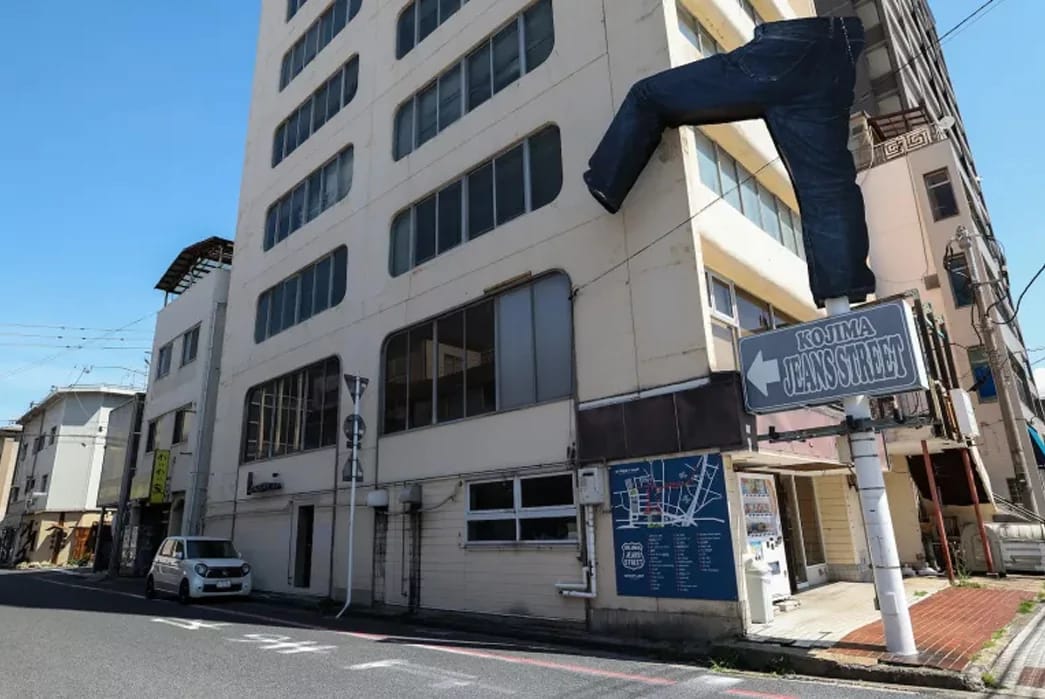
Kojima Calling: Where Japanese Denim Heritage Meets a New Generation – Sourcing Journal
The Iran War Isn’t Just A Gas-Price Story. It’s A Food-Price Crisis – Forbes
How Not to Interview (Interesting People) – On my Om
Bespoke Cowboy Bootmaker Zephan Parker’s Formula to Keep Craft Alive – Stitchdown
What did you think of today's newsletter? |